Franciscus Massarius, Castigationes & Annotationes in novum Plinii de naturali historia librum
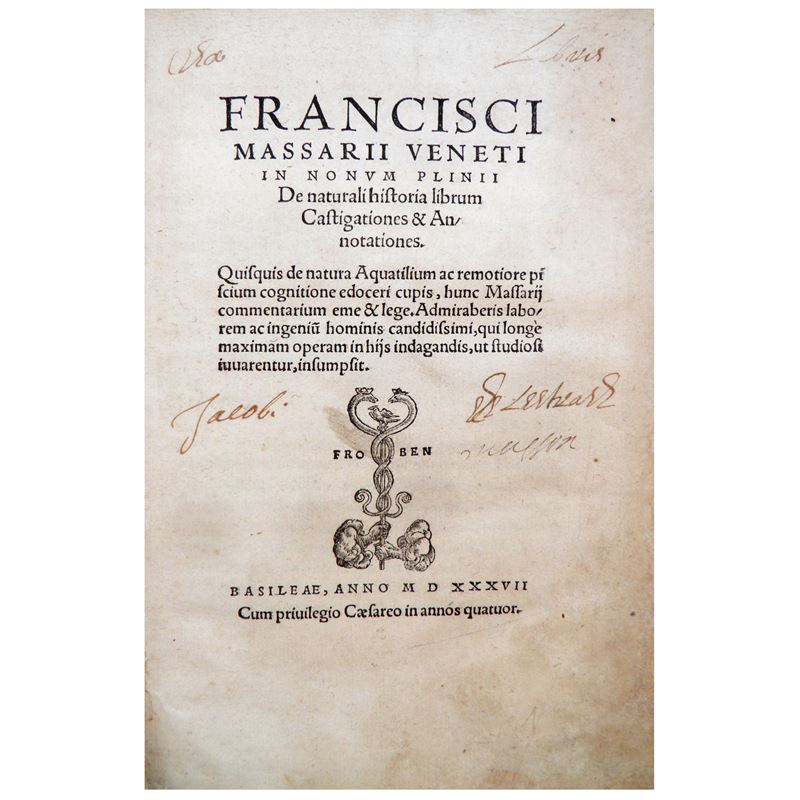
Franciscus Massarius, Castigationes & Annotationes in novum Plinii de naturali historia librum. Prima edizione di quest'opera rara, pubblicata a Basilea nel 1537 nell'officina Frobeniana. Il volume è composto da 16 fogli di prefazione e 367 pagine, di cui le ultime due sono un indice, accompagnate da una marca editoriale xilografica sul frontespizio e in Z4 e b4, oltre a capoilettera xilografici decorativi. Le dimensioni del volume sono di 250x150 mm.
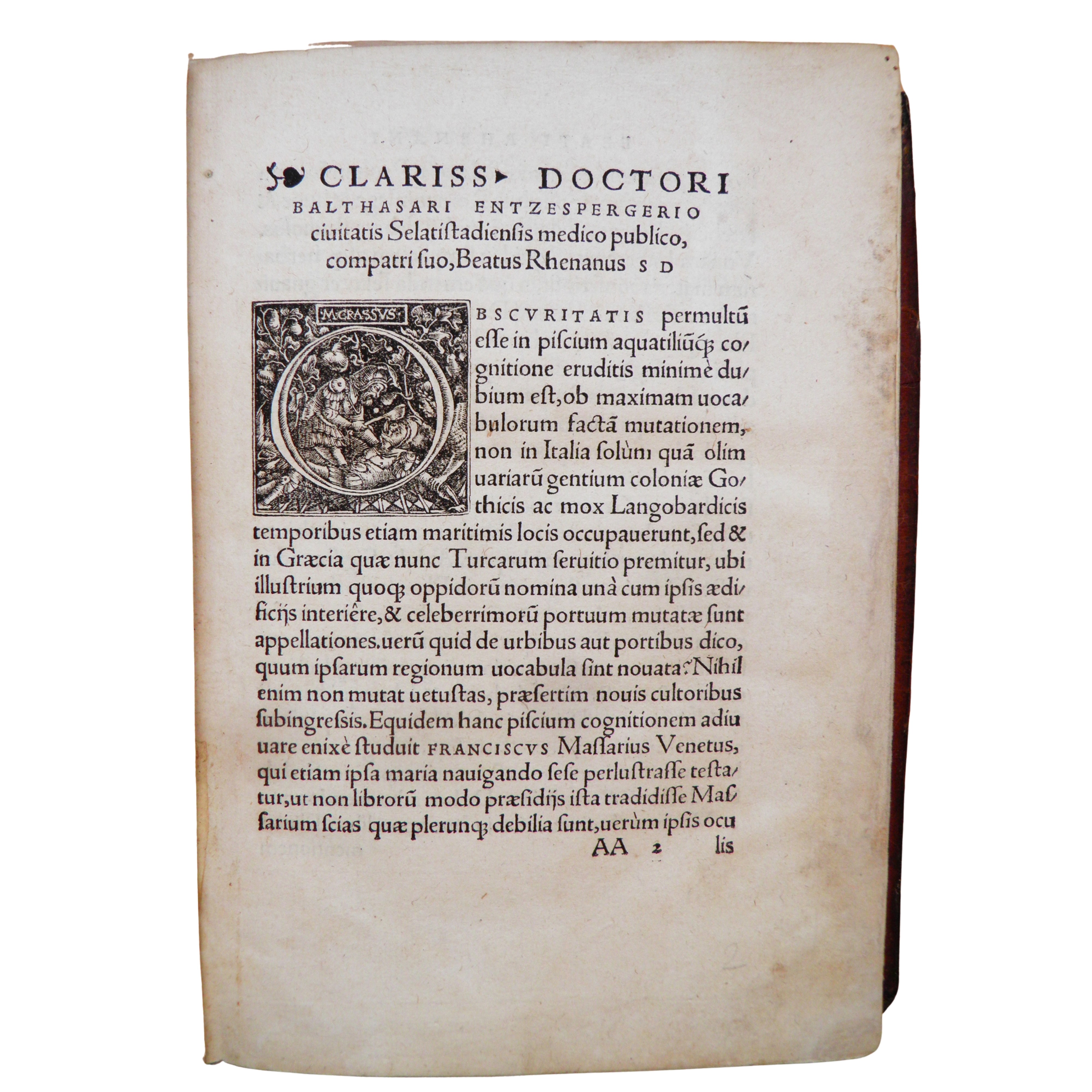
L'opera è introdotta da una prefazione di Beatus Rhenanus, noto umanista tedesco, che elogia il lavoro di Massarius per la sua oculata osservazione del mondo, frutto di viaggi personali, soprattutto in Oriente. Questo legame tra esperienza diretta e osservazione scientifica testimonia l'epoca di grande scambio di idee tra scienza e umanesimo.
Rilevante è lo stato di conservazione del volume: la rilegatura in pelle d'epoca, incisa a secco, presenta un dorso rinnovato e vari segni di usura, mentre alcune macchie sono presenti sui margini esterni di alcune pagine, senza compromettere il testo. Nonostante queste imperfezioni, il libro si presenta in buone condizioni generali ed è caratterizzato da ampi margini.
Generato con Artness AI